

Sirkap is one of the most fascinating archaeological sites in Pakistan and an important part of the ancient ruins of Taxila. Known for its Indo-Greek urban planning, Buddhist monuments, and multicultural architecture, Sirkap reflects the rich historical legacy of the Gandhara civilization.
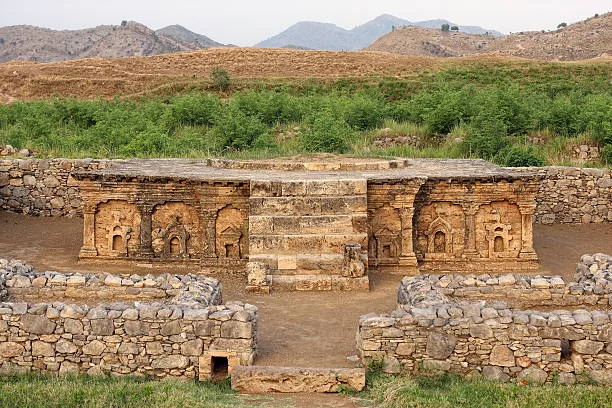
Founded during the 2nd century BC by the Bactrian Greeks, Sirkap became the second major city of Taxila after the decline of Bhir Mound. The city remained an important center of trade, religion, and culture for several centuries and today stands as one of the best examples of ancient Greek-influenced city planning in South Asia.
Where is Sirkap Located?
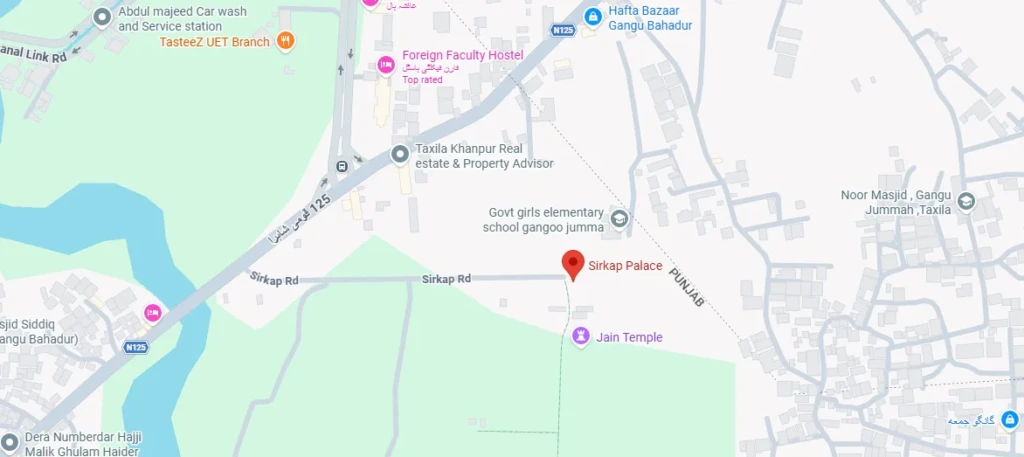
Sirkap is located in Taxila, Punjab, near the historic Grand Trunk Road and only a short distance from the Taxila Museum.
The site lies close to several major archaeological landmarks including:
- Dharmarajika Stupa
- Jandial Temple
- Bhir Mound
- Other ruins of Taxila
Its central location makes Sirkap one of the most visited historical attractions in the Taxila valley.
History of Sirkap
Origin of the Name “Sirkap”
The name “Sirkap” comes from local folklore and means “severed head.” According to legends, a mythical demon named Sirkap once lived in the area.
Foundation of the Indo-Greek City
Sirkap was founded by the Bactrian Greek king Demetrius after his conquest of the region during the 2nd century BC. The city later expanded under King Menander and eventually became the main urban center of Taxila.
The archaeological remains found at the site mainly belong to the Indo-Greek, Indo-Scythian, and Parthian periods.
Sirkap During the Parthian Era
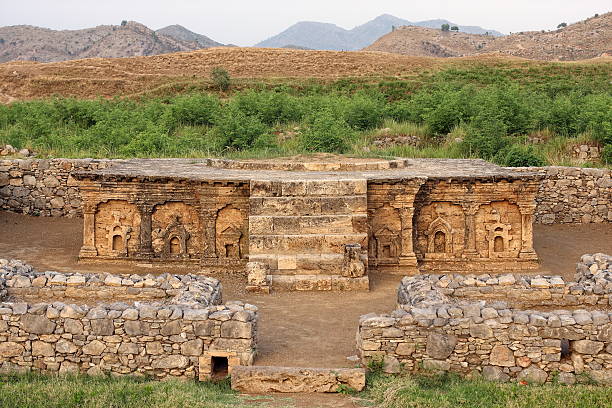
During the 1st century AD, the city came under Parthian rule. Historical records mention Gondophares, a Parthian ruler who governed the region during this period.
Sirkap remained an important commercial and cultural center until natural disasters and invasions contributed to its decline.
City Layout and Architecture
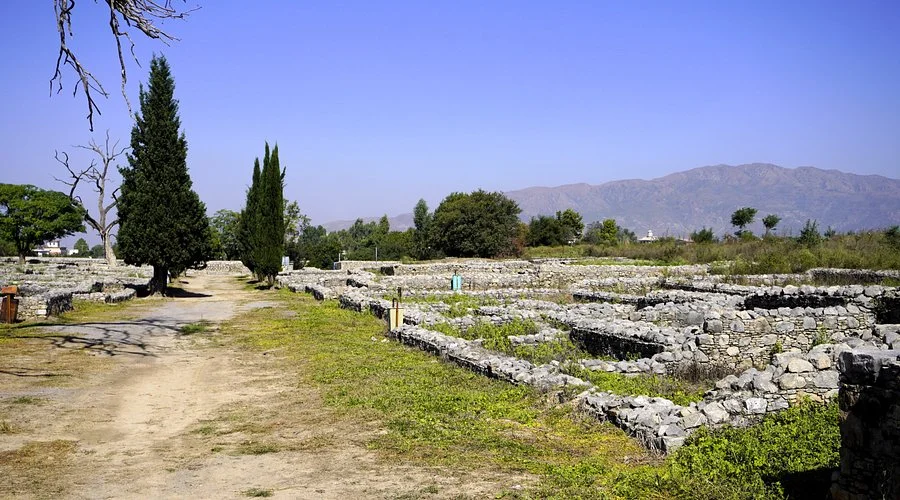
One of the most remarkable features of Sirkap is its Greek-style city planning. The city was designed using a grid layout similar to Hellenistic cities of the ancient Greek world.
The fortified city featured:
- Strong defensive walls
- Organized streets
- Residential buildings
- Markets
- Religious structures
- Public spaces
The main north-south street served as the commercial center of the city and was lined with shops, houses, temples, and stupas.

The architecture of Sirkap reflects a blend of:
- Greek influences
- Indian traditions
- Persian artistic styles
This cultural fusion makes Sirkap one of the most unique archaeological sites in South Asia.
Sirkap as a Religious Center
Sirkap was home to people of different religions and cultures. The city contained:
- Buddhist stupas
- Hindu shrines
- Jain temples
- Greek-style religious structures
The coexistence of multiple faiths demonstrates the cultural diversity of ancient Taxila.
What is a Stupa?
A stupa is an important Buddhist monument traditionally built to preserve sacred relics or religious artifacts. The word “stupa” comes from Sanskrit and means “heap” or “mound.”
In Buddhism, stupas served as places of worship, meditation, and pilgrimage.
Several stupas discovered in Sirkap highlight the strong Buddhist influence in the region during ancient times.

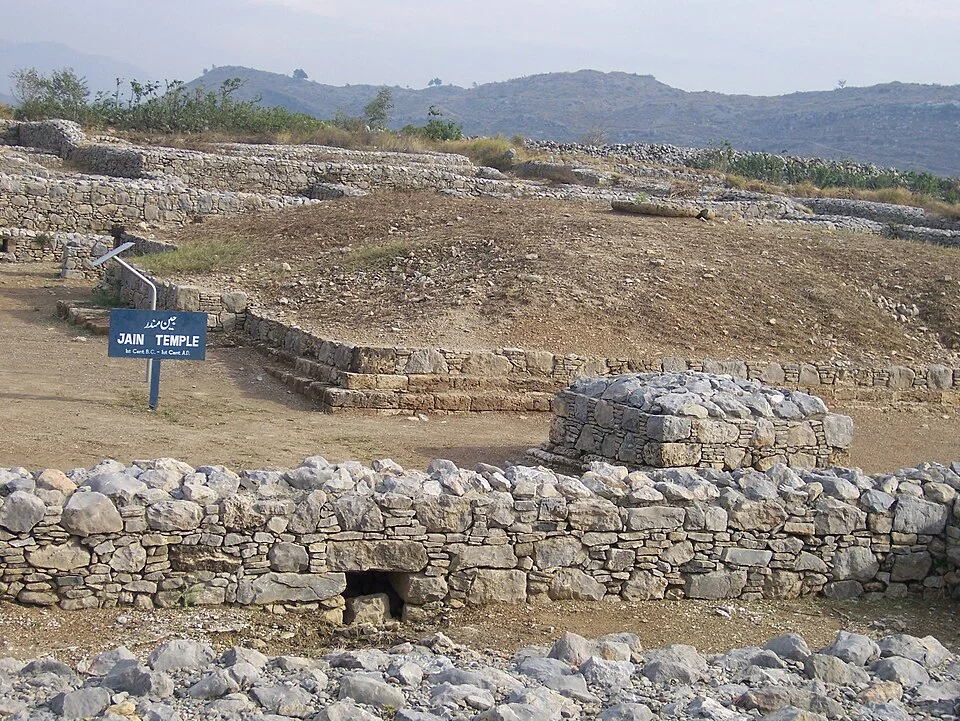
The Jain Temple at Sirkap
One of the most interesting structures in Sirkap is the ancient Jain Temple located along the city’s main street.
The temple featured:
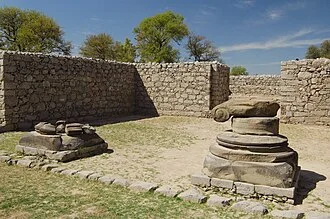
- Limestone pillars
- A circular plinth
- Decorative stone carvings
- A domed structure
Although much of the temple has collapsed over time, the remains still reflect the artistic and architectural sophistication of the ancient city.
Some parts of the original stone carvings are now preserved in the Taxila Museum.
The Ancient Sundial
Near the Jain Temple stands an ancient Greek-style sundial used for measuring time through sunlight and shadows.
The sundial reflects advanced scientific and architectural knowledge during the Indo-Greek period. Similar structures have been discovered in ancient Greece and other parts of the world.
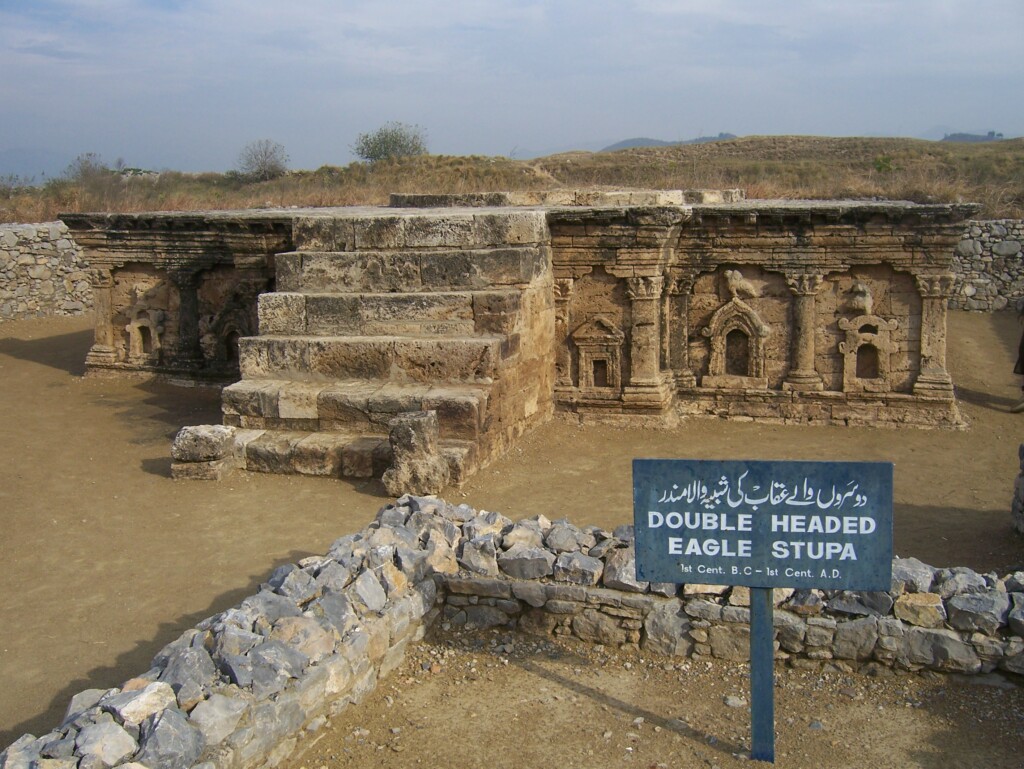
Eagle Temple
The Eagle Temple is one of the most famous religious structures in Sirkap. The temple stands on a raised circular platform and features architectural elements influenced by Greek, Indian, and Iranian art.
Important features include:
- Ionic and Corinthian columns
- Decorative stone carvings
- Staircases leading to the upper platform
- Guard rooms near the entrance
Although parts of the structure have been damaged, the Eagle Temple remains an outstanding example of Gandharan and Hellenistic architecture.
Shahi Mahal and Royal Residences
One of the largest residential structures in Sirkap is known as Shahi Mahal. Located near the main road, this complex likely served as a royal or elite residence.
Archaeologists discovered:
- Silver vessels
- Copper utensils
- Decorative artifacts
- Evidence of Greek and Roman influence
The building’s layout and design demonstrate the sophistication of urban life in ancient Taxila.
Archaeological Importance of Sirkap
Sirkap is considered one of the most important archaeological sites in Pakistan because it provides evidence of:
- Indo-Greek urban planning
- Religious diversity
- Gandhara civilization
- Ancient trade and culture
- Cross-cultural artistic influences
The site also highlights how Greek architectural traditions blended with local South Asian cultures.
Things to See at Sirkap
Visitors can explore:
- Ancient city walls
- Buddhist stupas
- Jain Temple
- Eagle Temple
- Ancient streets and markets
- Residential ruins
- Greek-style structures
The ruins offer a unique opportunity to experience one of the oldest planned cities in South Asia.
How to Reach Sirkap
Sirkap is located in the historic city of Taxila in Punjab, Pakistan, and can easily be reached from Islamabad and Rawalpindi through the Grand Trunk (GT) Road. The archaeological site lies approximately 40 kilometers from Islamabad and only a short distance from the Taxila Museum, making it one of the most accessible historical attractions in the Taxila valley. Visitors traveling by private car can comfortably reach the site within 45 minutes to one hour from Islamabad, while travelers from Rawalpindi can arrive even sooner depending on traffic conditions.
Tourists can visit Sirkap using private vehicles, taxis, ride-hailing services, or public transport operating between Islamabad, Rawalpindi, and Taxila. Local buses and passenger vans regularly travel along GT Road, and after reaching Taxila city, visitors can hire a rickshaw or local taxi to access the archaeological complex.
Best Time to Visit Sirkap
The best time to visit Sirkap is during:
- Spring (February to April)
- Autumn (September to November)
The pleasant weather during these seasons makes exploring the archaeological ruins more comfortable.
Travel Tips for Visitors
- Wear comfortable shoes for walking
- Carry water during summer
- Visit early in the day for better weather
- Respect historical monuments
- Hire a guide for deeper historical understanding
Nearby Attractions
While visiting Sirkap, tourists can also explore:
- Dharmarajika Stupa
- Jandial Temple
- Taxila Museum
- Bhir Mound
- Other Taxila archaeological sites
For a broader overview, read our complete guide on Taxila Pakistan.
Frequently Asked Questions (FAQs)
What is Sirkap famous for?
Sirkap is famous for its Indo-Greek city planning, ancient ruins, Buddhist stupas, and multicultural architecture.
Who built Sirkap?
Sirkap was founded by the Bactrian Greek king Demetrius during the 2nd century BC.
Where is Sirkap located?
Sirkap is located in Taxila, Punjab, Pakistan.
Why is Sirkap historically important?
Sirkap is historically important because it reflects the blend of Greek, Indian, and Persian cultures in ancient Gandhara civilization.
Can tourists visit Sirkap?
Yes, Sirkap is open to tourists and is one of the major attractions within the Taxila archaeological complex.
Conclusion
Sirkap stands as one of the finest examples of Indo-Greek architecture and urban planning in South Asia. Its ancient streets, temples, stupas, and multicultural heritage provide valuable insight into the rich history of Taxila and the Gandhara civilization.
Today, Sirkap remains a must-visit destination for travelers, historians, and archaeology enthusiasts exploring the ancient heritage of Pakistan.

63 Comments
Olivewidly
заработок на аккаунтах продажа аккаунтов
Peterdaw
аккаунты с балансом гарантия при продаже аккаунтов
RichardTen
купить аккаунт маркетплейс аккаунтов соцсетей
JamesCledo
безопасная сделка аккаунтов https://ploshadka-prodazha-akkauntov.ru/
Olivewidly
маркетплейс аккаунтов соцсетей профиль с подписчиками
Bryantbeini
гарантия при продаже аккаунтов купить аккаунт
RichardTen
продать аккаунт заработок на аккаунтах
DavidNaisk
Account marketplace Sell accounts
JasonRah
Purchase Ready-Made Accounts Account Selling Platform
MichaelMibra
Buy and Sell Accounts Account Store
JaredSoals
Buy and Sell Accounts Account Store
BrianCoaps
Buy and Sell Accounts Account exchange
Ronaldhex
Account Store Account Buying Service
ThomasGat
Account Buying Platform Buy Account
BruceCUBOW
Account marketplace Account exchange
Williamsep
Guaranteed Accounts Secure Account Sales
Ronaldhex
Profitable Account Sales Database of Accounts for Sale
EdmundDeats
buy account buy accounts
BrandonGuede
find accounts for sale account store
RomeoGaH
account trading platform find accounts for sale
DonaldSab
database of accounts for sale database of accounts for sale
Keithvet
account exchange service guaranteed accounts
RobertGeasy
account trading guaranteed accounts
Hectorwem
profitable account sales buy account
CarlosMar
account buying service secure account sales
Richardusero
online account store account selling platform
Stephentraky
account exchange accounts market
Carlosjeape
account exchange service accounts marketplace
Stevenslace
online account store verified accounts for sale
Clydedoulp
account trading service account store
JohnnyDot
social media account marketplace account buying platform
ThomasPouff
online account store accounts market
PhilipDib
ready-made accounts for sale account selling service
RandalOxilt
marketplace for ready-made accounts social media account marketplace
Zacharymax
buy and sell accounts profitable account sales
RichardMouse
profitable account sales online account store
Kevinjoipt
account store https://account-buy.org/
Thomasnussy
online account store sell accounts
NathanKiz
account marketplace secure account purchasing platform
BruceObere
account market sell accounts
Danielnot
account acquisition account purchase
Geraldmox
account selling service account market
Jasonvon
buy pre-made account gaming account marketplace
ThomasBeada
website for buying accounts https://top-social-accounts.org
accounts-offer.org_Cousy
account buying platform https://accounts-offer.org/
accounts-marketplace.xyz_Cousy
secure account purchasing platform accounts-marketplace.xyz
buy-best-accounts.org_Cousy
buy pre-made account https://buy-best-accounts.org/
social-accounts-marketplaces.live_Cousy
account marketplace https://social-accounts-marketplaces.live/
accounts-marketplace.live_Cousy
account market https://accounts-marketplace.live
social-accounts-marketplace.xyz_Cousy
account selling platform https://social-accounts-marketplace.xyz/
buy-accounts.space_Cousy
account market https://buy-accounts.space/
buy-accounts-shop.pro_Cousy
gaming account marketplace https://buy-accounts-shop.pro
accounts-marketplace.art_Cousy
guaranteed accounts account marketplace
social-accounts-marketplace.live_Cousy
account acquisition https://social-accounts-marketplace.live
buy-accounts.live_Cousy
sell account https://buy-accounts.live
accounts-marketplace.online_Cousy
gaming account marketplace https://accounts-marketplace.online
accounts-marketplace-best.pro_Cousy
buy accounts https://accounts-marketplace-best.pro
akkaunty-na-prodazhu.pro_Cousy
маркетплейс аккаунтов магазины аккаунтов
rynok-akkauntov.top_Cousy
маркетплейс аккаунтов https://rynok-akkauntov.top
kupit-akkaunt.xyz_Cousy
биржа аккаунтов https://kupit-akkaunt.xyz/
akkaunt-magazin.online_Cousy
маркетплейс аккаунтов akkaunt-magazin.online
akkaunty-market.live_Cousy
маркетплейс аккаунтов соцсетей akkaunty-market.live
kupit-akkaunty-market.xyz_Cousy
магазин аккаунтов https://kupit-akkaunty-market.xyz/