
Introduction
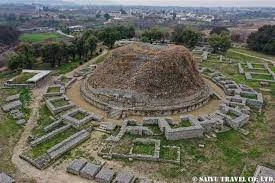
Dharmarajika Stupa is one of the oldest and most historically significant Buddhist stupas in Pakistan. Located near Taxila, the stupa forms an important part of the UNESCO World Heritage ruins of Taxila and reflects the rich Buddhist heritage of the ancient Gandhara civilization.
The stupa was originally constructed during the 3rd century BC by Emperor Ashoka to preserve sacred relics associated with Gautama Buddha. Over centuries, monasteries, shrines, votive stupas, and religious complexes were added around the monument, turning the area into a major center of Buddhist learning and pilgrimage.
Today, Dharmarajika Stupa attracts historians, archaeologists, travelers, and Buddhist pilgrims from around the world.
Where is Dharmarajika Stupa Located?
Dharmarajika Stupa is situated northeast of Taxila Cantonment along PMO Colony Road, approximately 3 kilometers east of the Taxila Museum.
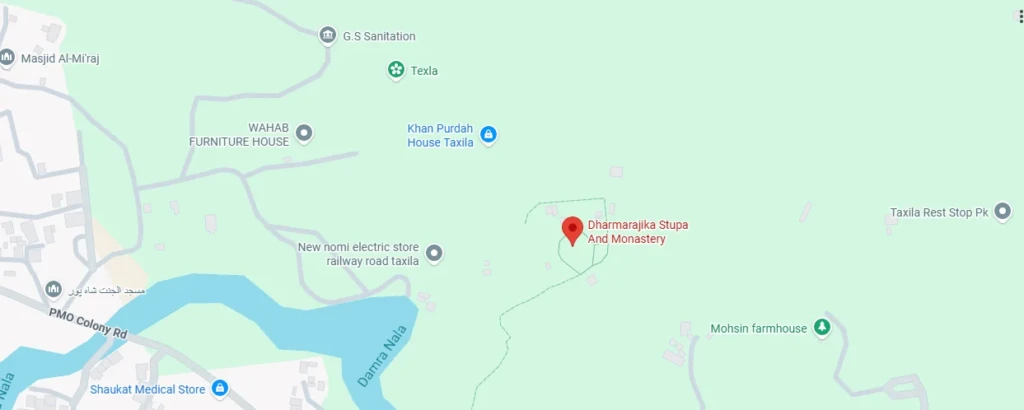
The site lies close to Sirkap, one of the major ancient cities of Taxila. According to Buddhist traditions, monasteries were ideally built neither too close nor too far from urban settlements, and Dharmarajika followed this principle.
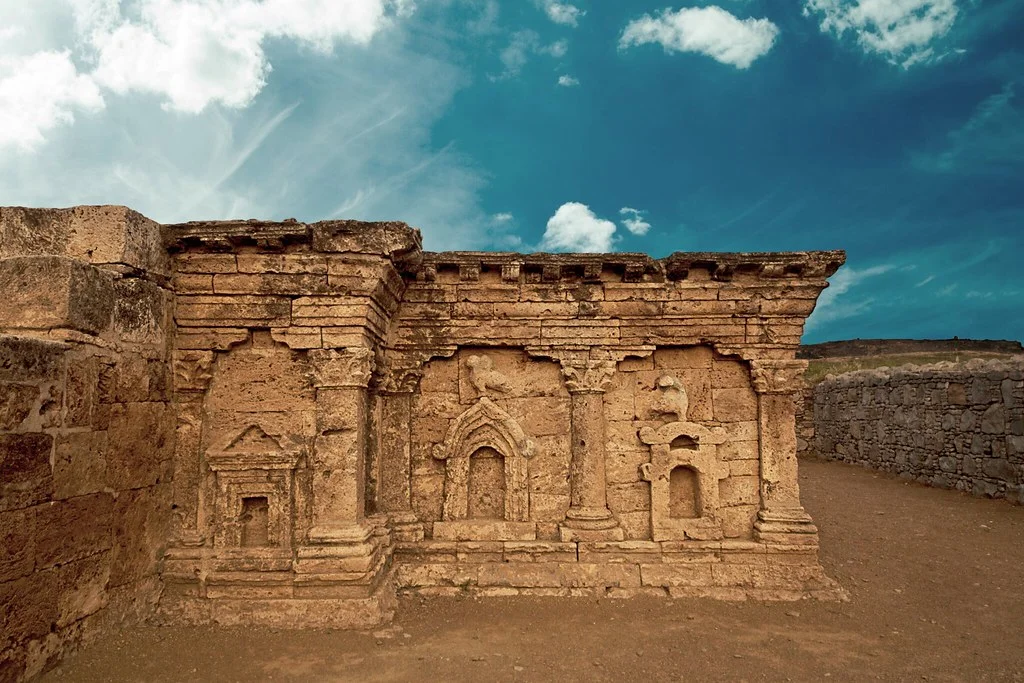
The structures surrounding the main stupa display different styles of brickwork and construction, showing contributions from multiple historical periods.
What is a Stupa?
A stupa is a sacred Buddhist monument traditionally built to preserve relics of Buddha or important religious objects. The term “stupa” comes from Sanskrit and means “heap” or “mound.”
In Buddhist architecture, stupas served as places of worship, meditation, pilgrimage, and spiritual gatherings. Most stupas contain relic chambers and are designed for circumambulation by devotees.
History of Dharmarajika Stupa
Construction During the Mauryan Era
Dharmarajika Stupa is believed to have been constructed during the reign of Emperor Ashoka in the 3rd century BC. Ashoka played a major role in spreading Buddhism throughout South Asia after converting to Buddhism following the Kalinga War.
Historical traditions suggest that sacred relics of Gautama Buddha were preserved inside the stupa, making it an important pilgrimage destination.
The name “Dharmarajika” is believed to originate from “Dharmaraja,” a title associated with both Buddha and Emperor Ashoka.
Expansion During the Kushan Period
The stupa was expanded and rebuilt during the Kushan period in the 2nd century CE. Additional monasteries, shrines, and smaller stupas were constructed around the main monument.
Archaeologists discovered Indo-Greek coins at the site, indicating continued cultural and religious activity in the region over several centuries.
Buddhist texts also mention that the structure was decorated with colorful glass tiles and used during important religious ceremonies.
Buddhist Importance of the Site
Dharmarajika became one of the major Buddhist religious centers in the Gandhara region. Pilgrims and monks from Central Asia, China, and nearby regions visited the site for worship and learning.
The surrounding monasteries were used by Buddhist monks for meditation, education, and religious practices.
Architecture of Dharmarajika Stupa
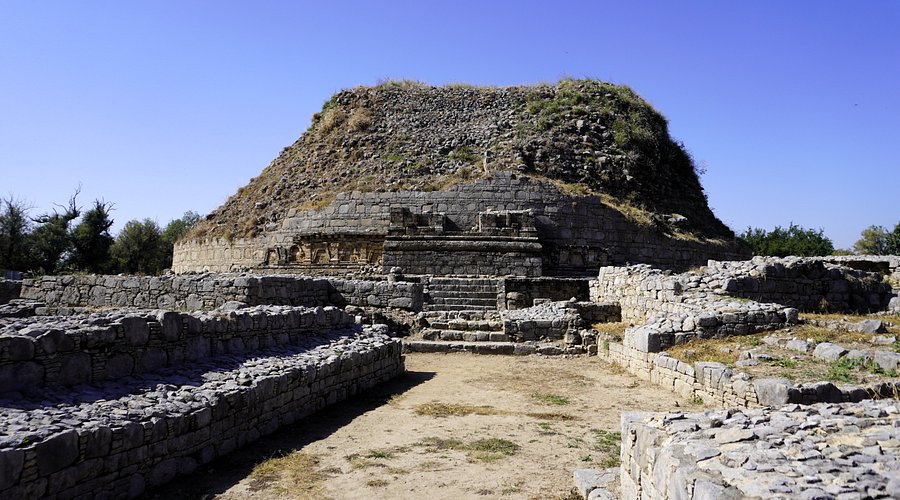
The main stupa features a circular design with a raised terrace surrounding its base. The structure originally stood around 45 feet high and measured approximately 131 feet in diameter.
Important architectural features include:
- Circular drum structure
- Four stairways facing cardinal directions
- Circumambulatory passage
- Votive stupas surrounding the monument
- Stone-paved walkways
The main stupa measures approximately 150 feet from east to west and 146 feet from north to south including terraces and stairways.

Construction materials used at the site include:
- Rubble masonry
- Lime plaster
- Kanjur stone
- Decorative glass elements
The seven-tiered umbrella stone that once crowned the stupa is believed to have collapsed centuries ago.
The Dharmarajika Monastic Complex
The Dharmarajika complex is divided into two main sections:

Main Stupa Area
This section contains:
- The Great Stupa
- Smaller votive stupas
- Shrines
- Religious structures from different eras
Several smaller stupas were later added around the main monument by private patrons and Buddhist communities.
Monastic Area
The monastic section contains multiple monasteries and residential quarters for Buddhist monks.
Archaeologists discovered:
- Monastic cells
- Courtyards
- Meditation chambers
- Religious shrines
- Assembly spaces
Some monasteries were built around central quadrangles while others included verandahs and communal structures for monks.
Monastery G, located west of the main stupa, is believed to have contained over fifty monastic cells.
Excavation of Dharmarajika Stupa
British archaeologist Sir John Marshall began excavating the site in 1913. By 1934, large portions of the complex had been uncovered.
During excavations, archaeologists discovered:
- Buddha relics
- Ancient coins
- Pottery
- Jewelry
- Religious sculptures
- Stone carvings
- Utensils and ceremonial objects
A silver reliquary containing bone fragments was also discovered and is currently preserved in the Taxila Museum.
Human skeletons found near the site may belong to monks killed during invasions by the White Huns.

Destruction and Decline
During the 5th century CE, the White Huns invaded the Gandhara region and destroyed many Buddhist monasteries and religious centers, including Dharmarajika Stupa.
Historical records mention that the Hun ruler Mihirakula persecuted Buddhists and damaged numerous temples throughout Gandhara. Following these invasions, the site gradually declined and was eventually abandoned.
Why Dharmarajika Stupa is Important
Dharmarajika Stupa is important because it:
- Represents early Buddhist architecture
- Preserves Gandhara civilization heritage
- Contains ancient Buddhist relics
- Forms part of the UNESCO-listed Taxila ruins
- Reflects the spread of Buddhism in South Asia
The site remains one of Pakistan’s most valuable archaeological and religious landmarks.
Things to See at Dharmarajika Stupa
Visitors can explore:
- The Great Stupa
- Ancient monasteries
- Votive stupas
- Archaeological ruins
- Buddhist pathways
- Historic stone structures
The peaceful atmosphere and historical setting make it an excellent destination for heritage tourism and photography.
How to Reach Dharmarajika Stupa
Dharmarajika Stupa is located near Taxila in Punjab, Pakistan, approximately 40 kilometers from Islamabad and around 35 kilometers from Rawalpindi. The site lies along PMO Colony Road, about 3 kilometers east of the Taxila Museum, making it easily accessible for tourists and history enthusiasts. Visitors can reach the stupa through the historic Grand Trunk (GT) Road, which connects the region with major cities of Pakistan.
Travelers can visit Dharmarajika Stupa by private car, taxi, ride-hailing services, or public transport. Local buses and vans regularly operate between Islamabad, Rawalpindi, and Taxila, while rickshaws and taxis are available within Taxila city to reach the archaeological site. Many tourists also combine their visit with nearby attractions such as Sirkap and Jandial Temple, as these historical sites are located close to each other.
Best Time to Visit
The best time to visit Dharmarajika Stupa is during:
- Spring (February to April)
- Autumn (September to November)
The weather remains pleasant during these seasons, making exploration easier and more comfortable.
Travel Tips for Visitors
- Wear comfortable walking shoes
- Carry water during warmer months
- Visit early in the morning
- Respect historical monuments
- Consider hiring a local guide
Nearby Attractions
While visiting Dharmarajika Stupa, tourists can also explore:
- Sirkap
- Jandial Temple
- Taxila Museum
- Bhir Mound
- Other archaeological sites in Taxila
For a broader overview, read our complete guide on Taxila Pakistan.
Frequently Asked Questions (FAQs)
What is Dharmarajika Stupa famous for?
Dharmarajika Stupa is famous for being one of the oldest Buddhist stupas in Pakistan and an important monument of the Gandhara civilization.
Who built Dharmarajika Stupa?
The stupa was originally built by Emperor Ashoka during the 3rd century BC.
Where is Dharmarajika Stupa located?
The site is located near Taxila in Punjab, Pakistan.
Is Dharmarajika part of the Taxila ruins?
Yes, Dharmarajika Stupa is part of the UNESCO World Heritage ruins of Taxila.
Can tourists visit Dharmarajika Stupa?
Yes, tourists, historians, and researchers can visit the site throughout the year.
Conclusion
Dharmarajika Stupa is one of the most remarkable Buddhist heritage sites in Pakistan. Built during the Mauryan era and expanded over centuries, the stupa reflects the religious, cultural, and architectural richness of the Gandhara civilization.
Today, its ruins continue to attract visitors from across the world who wish to explore the ancient Buddhist history of Taxila and the historical legacy of Pakistan.

71 Comments
SDiozxswidly
маркетплейс для реселлеров маркетплейс аккаунтов соцсетей
Zazacwidly
маркетплейс аккаунтов соцсетей
SDiozxswidly
купить аккаунт гарантия при продаже аккаунтов
Zazacwidly
безопасная сделка аккаунтов перепродажа аккаунтов
Olasxwidly
маркетплейс аккаунтов магазин аккаунтов
Josephwidly
маркетплейс аккаунтов гарантия при продаже аккаунтов
RobertTig
магазин аккаунтов продать аккаунт
Olivewidly
безопасная сделка аккаунтов аккаунт для рекламы
Droswidly
купить аккаунт маркетплейс аккаунтов
Olivewidly
магазин аккаунтов социальных сетей купить аккаунт
Peterdaw
магазин аккаунтов маркетплейс аккаунтов
RichardTen
продажа аккаунтов соцсетей https://magazin-akkauntov-online.ru/
JamesCledo
заработок на аккаунтах биржа аккаунтов
Olivewidly
биржа аккаунтов https://prodat-akkaunt-online.ru
Bryantbeini
услуги по продаже аккаунтов продажа аккаунтов соцсетей
RichardTen
магазин аккаунтов купить аккаунт
DavidNaisk
Account Selling Platform https://buyverifiedaccounts001.com/
JasonRah
Gaming account marketplace Website for Buying Accounts
MichaelMibra
Guaranteed Accounts Website for Buying Accounts
WalterFlact
Verified Accounts for Sale Account Buying Platform
JaredSoals
Marketplace for Ready-Made Accounts Ready-Made Accounts for Sale
BrianCoaps
Sell Account Secure Account Sales
Ronaldhex
Website for Selling Accounts https://buyagedaccounts001.com
ThomasGat
Sell accounts Buy and Sell Accounts
BruceCUBOW
Account Selling Service Buy and Sell Accounts
Williamsep
Account Trading Platform Buy and Sell Accounts
Ronaldhex
Account Exchange Service https://socialmediaaccountsale.com/
EdmundDeats
account marketplace sell account
BrandonGuede
sell account find accounts for sale
RomeoGaH
account buying platform account trading
Keithvet
accounts marketplace account trading service
RobertGeasy
sell accounts guaranteed accounts
Hectorwem
account market account market
CarlosMar
account buying service account trading service
Richardusero
secure account sales gaming account marketplace
Stephentraky
find accounts for sale secure account purchasing platform
Carlosjeape
find accounts for sale sell accounts
Stevenslace
account trading platform account buying platform
Clydedoulp
account purchase account exchange service
JohnnyDot
buy and sell accounts accounts for sale
ThomasPouff
profitable account sales account purchase
PhilipDib
buy and sell accounts account buying platform
RandalOxilt
secure account sales account trading service
Zacharymax
account acquisition database of accounts for sale
RichardMouse
website for buying accounts website for buying accounts
Kevinjoipt
database of accounts for sale buy and sell accounts
Thomasnussy
gaming account marketplace guaranteed accounts
NathanKiz
buy pre-made account account buying service
BruceObere
social media account marketplace account catalog
Danielnot
accounts for sale buy accounts
Jasonvon
online account store https://accounts-buy-now.org
ThomasBeada
online account store accounts for sale
accounts-offer.org_Cousy
buy account https://accounts-offer.org
accounts-marketplace.xyz_Cousy
database of accounts for sale https://accounts-marketplace.xyz
buy-best-accounts.org_Cousy
accounts market account market
social-accounts-marketplaces.live_Cousy
buy account https://social-accounts-marketplaces.live/
accounts-marketplace.live_Cousy
sell pre-made account https://accounts-marketplace.live
social-accounts-marketplace.xyz_Cousy
website for selling accounts https://social-accounts-marketplace.xyz
buy-accounts.space_Cousy
verified accounts for sale buy-accounts.space
buy-accounts-shop.pro_Cousy
find accounts for sale https://buy-accounts-shop.pro
accounts-marketplace.art_Cousy
buy pre-made account https://accounts-marketplace.art
social-accounts-marketplace.live_Cousy
account buying service https://social-accounts-marketplace.live
buy-accounts.live_Cousy
account catalog https://buy-accounts.live
accounts-marketplace.online_Cousy
purchase ready-made accounts accounts marketplace
accounts-marketplace-best.pro_Cousy
account selling platform https://accounts-marketplace-best.pro
akkaunty-na-prodazhu.pro_Cousy
маркетплейс аккаунтов соцсетей https://akkaunty-na-prodazhu.pro
rynok-akkauntov.top_Cousy
магазин аккаунтов https://rynok-akkauntov.top
kupit-akkaunt.xyz_Cousy
маркетплейс аккаунтов kupit-akkaunt.xyz
akkaunt-magazin.online_Cousy
маркетплейс аккаунтов соцсетей https://akkaunt-magazin.online/
akkaunty-market.live_Cousy
продать аккаунт https://akkaunty-market.live
kupit-akkaunty-market.xyz_Cousy
продажа аккаунтов маркетплейсов аккаунтов