
Taxila is one of the most significant archaeological and historical sites in Pakistan. Recognized as a UNESCO World Heritage Site, Taxila was once a major center of the ancient Gandhara civilization and an important hub of Buddhism, culture, trade, and education.
Located around 40 kilometers northwest of Islamabad near the historic Grand Trunk Road, Taxila is home to ancient ruins, monasteries, stupas, temples, and settlements dating back thousands of years. From the remains of early civilizations to the influence of Greeks, Persians, and Buddhists, Taxila offers a remarkable glimpse into South Asia’s ancient history.
This guide explores the history, famous ruins, museums, travel information, and top attractions of Taxila.
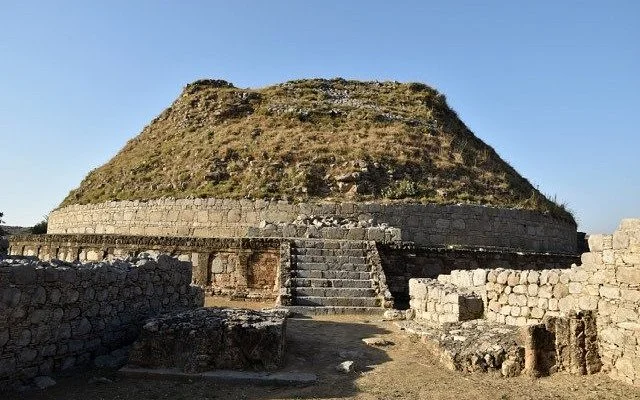
Where is Taxila Located?
Taxila is situated in Punjab, Pakistan, approximately 40 km from Islamabad and northwest of Rawalpindi. The city lies along the historic GT Road, making it easily accessible for tourists and researchers.
The region is surrounded by small hills and scenic landscapes, while streams flowing from the Haro River once helped make the valley fertile and prosperous. Taxila also offers beautiful views of the Hazara and Murree hills from the northeast.
Geography and Landscape of Taxila
The Taxila valley is naturally protected by surrounding hills and mountains. In ancient times, rivers and streams flowing through the area provided irrigation and contributed to the growth of settlements and agriculture.
History of Taxila
Taxila has a rich history spanning thousands of years and has witnessed the rise and fall of several civilizations.
Early Settlements in Taxila
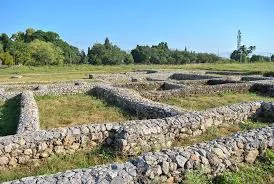
The earliest settlement in Taxila is believed to be Sarai Kala, where evidence from the Neolithic, Bronze Age, and Iron Age has been discovered. Archaeologists found polished stone tools, pottery, and traces of early human settlements dating back to the late 4th and early 3rd millennium BC.
The Bhir Mound is considered the oldest historic city of Taxila and was likely established during the 6th century BC under Achaemenian influence.
Taxila During the Gandhara Civilization
Taxila became one of the major cities of the Gandhara civilization, which flourished as a center of trade, culture, and religion. Gandhara was known for its Buddhist heritage and artistic achievements.
The region connected South Asia with Central Asia and played an important role in cultural exchange.
Greek Influence and Alexander the Great
In 326 BC, Alexander the Great arrived in Taxila and found it to be a prosperous and densely populated city. Greek influence later became visible in the city’s architecture and urban planning, especially in Sirkap, which was built following the Hellenistic grid system.
The Chinese traveler Xuanzang also visited Taxila in the 7th century AD and described it as a wealthy and fertile region with abundant water and thriving agriculture.
Taxila Under Buddhist Rule
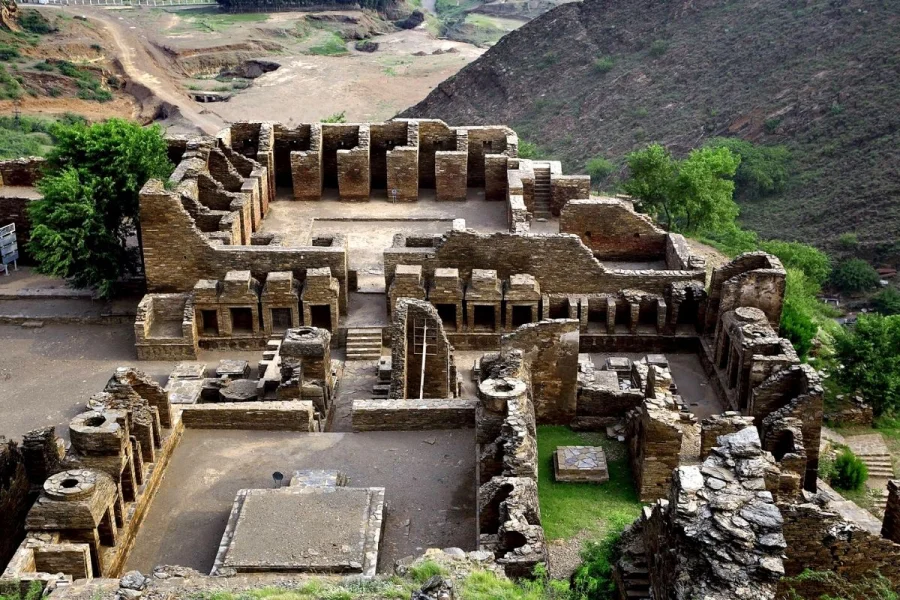
Taxila became an important Buddhist center during the reign of Emperor Ashoka, who helped spread Buddhism across the region. Several monasteries, stupas, and religious complexes were built during this era.
The city attracted pilgrims, monks, and scholars from Central Asia and China. Ancient educational institutions in Taxila became famous for teaching subjects such as medicine, philosophy, architecture, spirituality, and fine arts.
Decline of Taxila
Over time, invasions, conflicts, and natural disasters contributed to the decline of Taxila. Several settlements were destroyed, abandoned, or damaged by earthquakes and attacks from invading groups.
Despite its decline, the ruins of Taxila survived and later became one of the most important archaeological discoveries in South Asia.
Why Taxila is Famous
Taxila is famous for its:
- UNESCO World Heritage status
- Ancient Buddhist heritage
- Gandhara civilization
- Archaeological ruins
- Greek and Persian influences
- Historical monasteries and stupas
The city is considered one of the oldest centers of learning in the world and remains an important destination for historians, archaeologists, and tourists.
Top Places to Visit in Taxila
Dharmarajika Stupa
Dharmarajika Stupa is one of the oldest Buddhist stupas in Pakistan and is believed to have been established during the reign of Emperor Ashoka. The site served as an important religious center for Buddhist pilgrims.
Read more in our detailed guide to Dharmarajika Stupa.
Sirkap
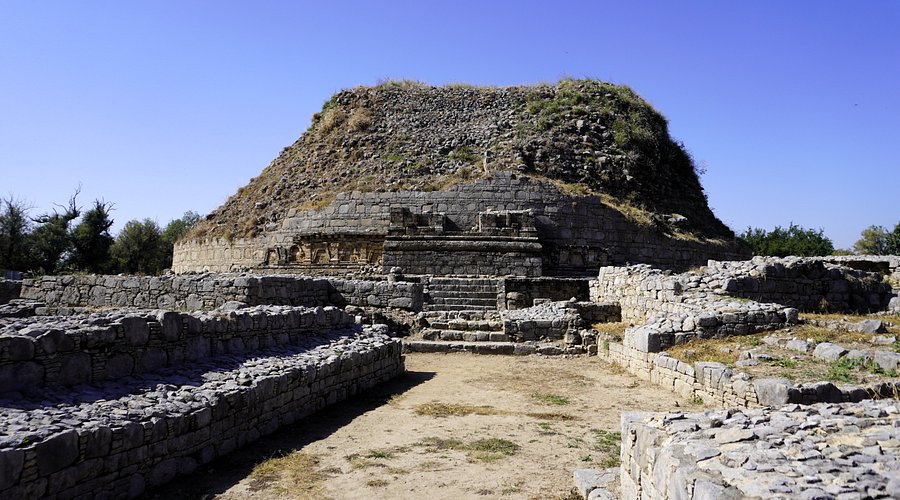
Sirkap was a fortified ancient city built by Indo-Greek rulers during the 2nd century BC. The city is famous for its Greek-style urban planning and unique blend of Eastern and Western architecture.
Explore our complete guide to Sirkap in Taxila.
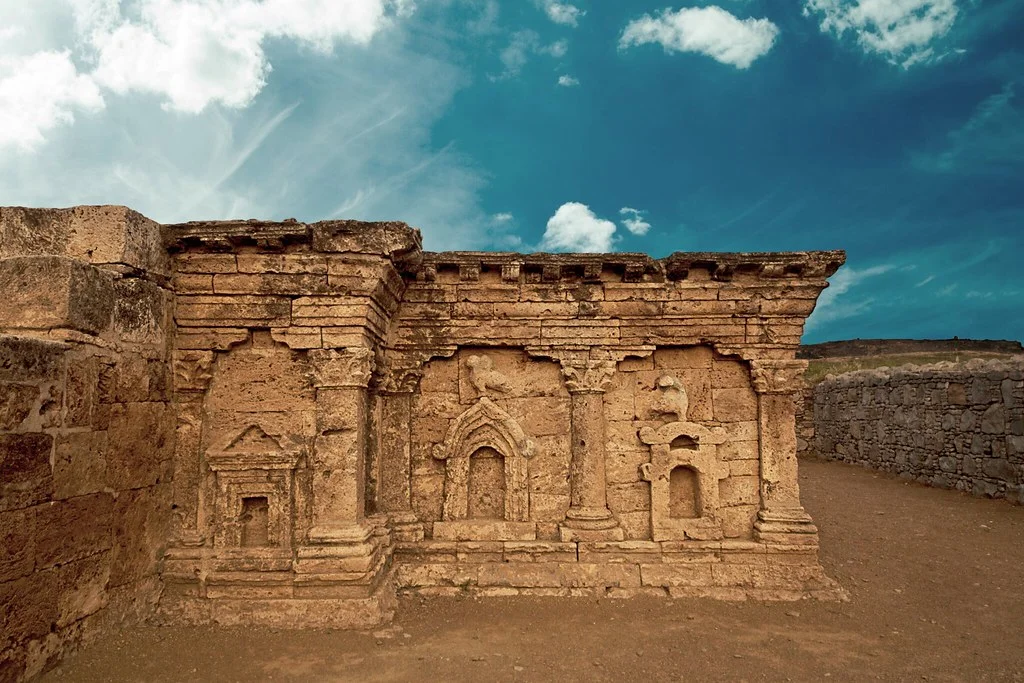
Jandial Temple
Jandial Temple is one of the most unique archaeological structures in Taxila due to its strong resemblance to classical Greek temples. Its Ionic architectural style reflects the cultural influence of the Greeks in the region.
Learn more about Jandial Temple and its history.
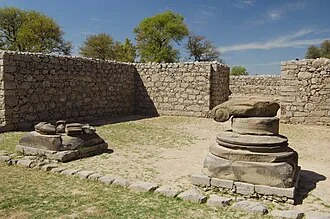
Bhir Mound
Bhir Mound is the oldest historic settlement in Taxila and is associated with the Achaemenian period and the arrival of Alexander the Great.
Sirsukh
Sirsukh was a later settlement of Taxila built during the Kushan period. The city featured fortified walls and advanced urban planning.
Taxila Museum
The Taxila Museum houses thousands of artifacts recovered during archaeological excavations. These include:
- Buddhist sculptures
- Ancient coins
- Pottery
- Religious relics
- Stone carvings
- Jewelry and tools
The museum provides valuable insight into the Gandhara civilization and the Buddhist heritage of the region.
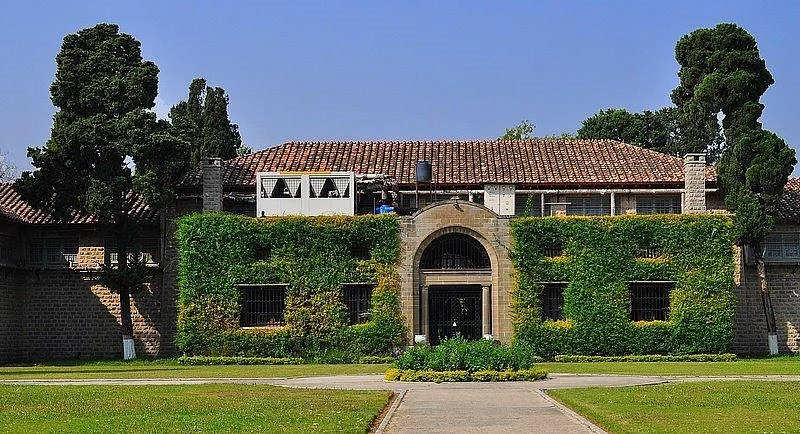
Ancient Ruins and Archaeological Discoveries
In 1912, British archaeologist Sir John Marshall began large-scale excavations in Taxila, which continued until 1934. These excavations uncovered several ancient cities, monasteries, temples, and stupas.
Archaeologists discovered evidence of multiple civilizations, including Indo-Greek, Persian, Kushan, and Buddhist influences.
Taxila’s archaeological complex remains one of the most important heritage sites in Pakistan and is protected under national heritage laws.
Architecture and Urban Planning in Taxila
The architecture of Taxila reflects a blend of local, Greek, Persian, and Buddhist influences. Ancient builders used stone masonry techniques to construct monasteries, walls, temples, and residential buildings.
The city planning of Sirkap clearly demonstrates the influence of Hellenistic architecture through its organized streets and grid-based layout.
Things to Do in Taxila
Visitors to Taxila can:
- Explore ancient ruins
- Visit Buddhist monasteries and stupas
- Discover Gandhara art and artifacts
- Visit Taxila Museum
- Enjoy photography
- Learn about ancient civilizations
How to Reach Taxila
Taxila can easily be reached by road from Islamabad and Rawalpindi through the Grand Trunk Road.
Distance from Islamabad:
Approximately 40 km
Distance from Rawalpindi:
Approximately 32 km
Public transport and private vehicles are commonly used to travel to Taxila.
Best Time to Visit Taxila
The best time to visit Taxila is during:
- Spring (February to April)
- Autumn (September to November)
The weather remains pleasant during these months, making it ideal for sightseeing and exploration.
Travel Tips for Visitors
- Wear comfortable walking shoes
- Carry water during summer visits
- Respect historical and religious sites
- Visit early in the morning for a better experience
- Hire a local guide to understand the historical significance
Nearby Attractions
While visiting Taxila, tourists can also explore:
- Wah Gardens
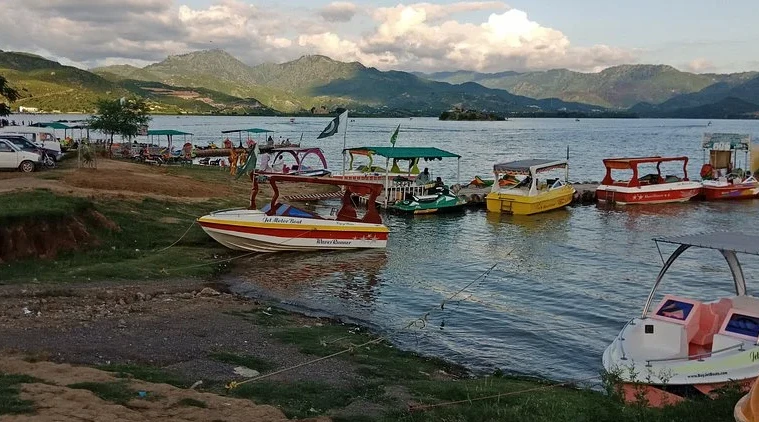
- Khanpur Dam
- Islamabad attractions
- Historical sites in Attock
Frequently Asked Questions (FAQs)
What is Taxila famous for?
Taxila is famous for its ancient ruins, Buddhist heritage, Gandhara civilization, and UNESCO World Heritage status.
Is Taxila a UNESCO World Heritage Site?
Yes, Taxila was designated as a UNESCO World Heritage Site due to its historical and archaeological importance.
How old is Taxila?
Taxila’s history dates back thousands of years, with evidence of settlements from the Neolithic era.
What are the main ruins in Taxila?
Major ruins include:
- Dharmarajika Stupa
- Sirkap
- Jandial Temple
- Bhir Mound
- Sirsukh
Can tourists visit these historical Buddhist sites during Vesak?
Yes, Vesak often increases attention on sites like Taxila and Swat, making it a meaningful time for tourists and researchers to explore Pakistan’s Buddhist heritage.
How far is Taxila from Islamabad?
Taxila is approximately 40 kilometers from Islamabad.
Conclusion
Taxila stands as one of Pakistan’s greatest historical and archaeological treasures. From the ancient Gandhara civilization to Buddhist monasteries and Greek-influenced architecture, the city reflects centuries of cultural and historical evolution.
Today, Taxila continues to attract historians, archaeologists, travelers, and heritage enthusiasts from around the world. Its ruins, museums, and historical landmarks make it a must-visit destination for anyone interested in the rich history of Pakistan.

59 Comments
Olivewidly
маркетплейс для реселлеров покупка аккаунтов
Peterdaw
маркетплейс аккаунтов профиль с подписчиками
RichardTen
перепродажа аккаунтов https://magazin-akkauntov-online.ru/
JamesCledo
купить аккаунт купить аккаунт
Olivewidly
купить аккаунт с прокачкой площадка для продажи аккаунтов
Bryantbeini
купить аккаунт с прокачкой маркетплейс аккаунтов
RichardTen
продажа аккаунтов маркетплейс аккаунтов
DavidNaisk
Account trading platform Account Acquisition
JasonRah
Secure Account Sales Account Exchange Service
MichaelMibra
Account Trading Account Selling Platform
WalterFlact
Account Buying Platform Accounts market
JaredSoals
Accounts for Sale Account Store
BrianCoaps
Accounts marketplace Social media account marketplace
Ronaldhex
Buy accounts Account marketplace
BruceCUBOW
Account Buying Service Account Trading
Williamsep
Gaming account marketplace Account exchange
Ronaldhex
Account trading platform Accounts marketplace
BrandonGuede
buy account ready-made accounts for sale
EdmundDeats
account trading platform guaranteed accounts
RomeoGaH
sell accounts buy accounts
DonaldSab
buy accounts online account store
Keithvet
account buying service profitable account sales
RobertGeasy
account exchange account buying service
Hectorwem
account trading secure account sales
CarlosMar
account trading service website for buying accounts
Richardusero
account buying platform accounts marketplace
Carlosjeape
account exchange service secure account purchasing platform
Stephentraky
secure account purchasing platform ready-made accounts for sale
Stevenslace
account marketplace sell account
Clydedoulp
buy and sell accounts account trading service
JohnnyDot
account selling service account sale
ThomasPouff
marketplace for ready-made accounts accounts-for-sale.org
PhilipDib
marketplace for ready-made accounts account exchange service
RandalOxilt
account buying service purchase ready-made accounts
RichardMouse
profitable account sales accounts for sale
Zacharymax
gaming account marketplace account purchase
Kevinjoipt
account selling platform database of accounts for sale
Thomasnussy
find accounts for sale account selling service
NathanKiz
website for selling accounts account market
BruceObere
sell account discount-accounts.org
Danielnot
ready-made accounts for sale sell account
Jasonvon
sell pre-made account accounts for sale
Geraldmox
account trading platform account exchange service
ThomasBeada
account market account store
accounts-offer.org_Cousy
sell pre-made account https://accounts-offer.org
accounts-marketplace.xyz_Cousy
sell accounts https://accounts-marketplace.xyz/
buy-best-accounts.org_Cousy
buy and sell accounts https://buy-best-accounts.org
social-accounts-marketplaces.live_Cousy
website for buying accounts account market
accounts-marketplace.live_Cousy
account buying platform https://accounts-marketplace.live/
social-accounts-marketplace.xyz_Cousy
account buying platform https://social-accounts-marketplace.xyz
buy-accounts.space_Cousy
account acquisition https://buy-accounts.space/
buy-accounts-shop.pro_Cousy
accounts for sale https://buy-accounts-shop.pro/
buy-accounts.live_Cousy
purchase ready-made accounts https://buy-accounts.live
social-accounts-marketplace.live_Cousy
account store https://social-accounts-marketplace.live
accounts-marketplace.online_Cousy
accounts for sale https://accounts-marketplace.online/
accounts-marketplace-best.pro_Cousy
sell accounts buy accounts
akkaunty-na-prodazhu.pro_Cousy
магазин аккаунтов https://akkaunty-na-prodazhu.pro/
rynok-akkauntov.top_Cousy
купить аккаунт магазины аккаунтов
kupit-akkaunt.xyz_Cousy
купить аккаунт https://kupit-akkaunt.xyz/