
Introduction
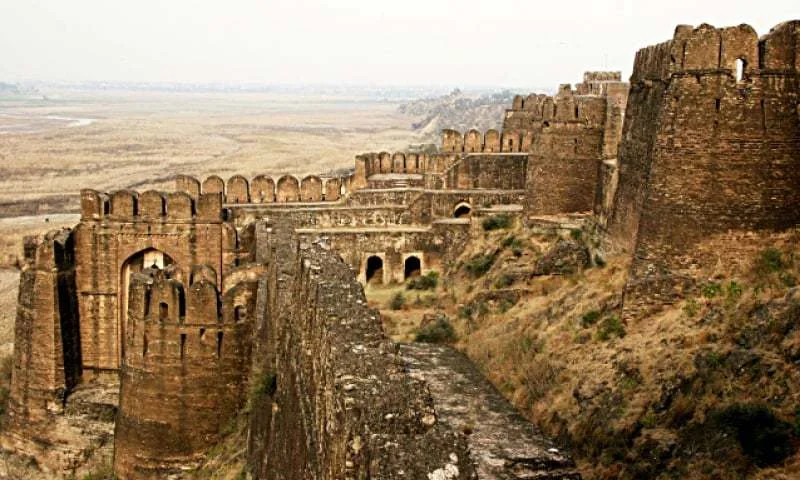
Jhelum is a historic city in Punjab, Pakistan. Known for its rivers and ancient history, Jhelum has been home to many battles and empires. One of its most famous landmarks is Rohtas Fort, a 16th-century military fort built by Sher Shah Suri. It is one of the most amazing historical forts of Pakistan. This fort reflects power, strategy, and architectural brilliance. Rohtas Fort is a must-visit for history lovers and travelers exploring Punjab.
Where is Rohtas Fort Located?
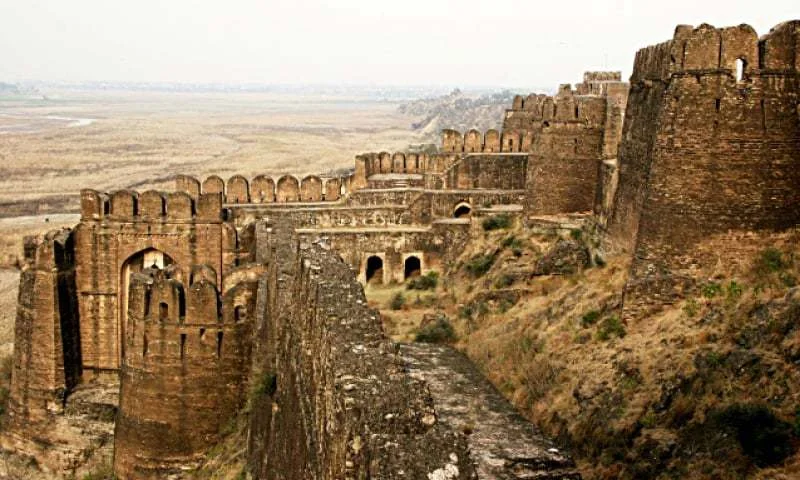
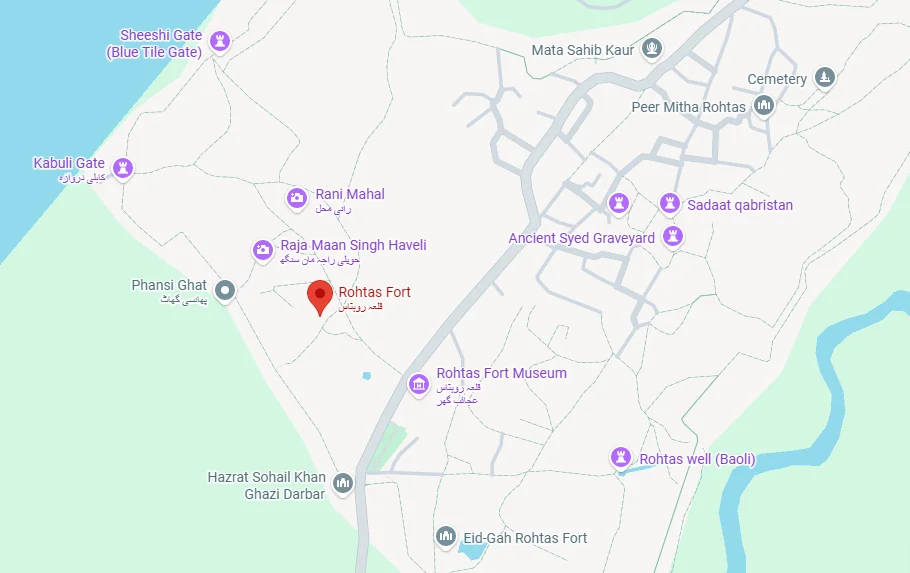
Rohtas Fort is located near Dina, Jhelum District, Punjab, Pakistan. It is located just off the Grand Trunk Road (GT Road), one of the oldest trade and travel routes connecting Central Asia to South Asia.
The fort sits approximately:
- 115 km from Islamabad
- 190 km from Lahore
- 40 km from Jhelum city center
This location made Rohtas Fort strategically important in history, as it allowed Sher Shah Suri to control movement of armies and trade.
History of Rohtas Fort
Sher Shah Suri built Rohtas Fort in 1541 following his victories over Mughal emperor Humayun in the Battle of Chausa (1539) and the Battle of Kannauj (1540).
Sher Shah Suri wanted to secure northern India and prevent Humayun from returning. Rohtas Fort was built as a military stronghold, controlling the passage from Afghanistan to the Indian subcontinent. The fort also helped Sher Shah Suri suppress the local Gakhar tribes, who had supported Humayun. Its location on high ground provided maximum visibility of approaching armies.
Thousands of workers labored for about four years, completing the fort with massive walls, deep gates, and strong bastions. Sher Shah Suri’s vision was purely military; he did not build Rohtas Fort for luxury or residential purposes.
Architecture of Rohtas Fort
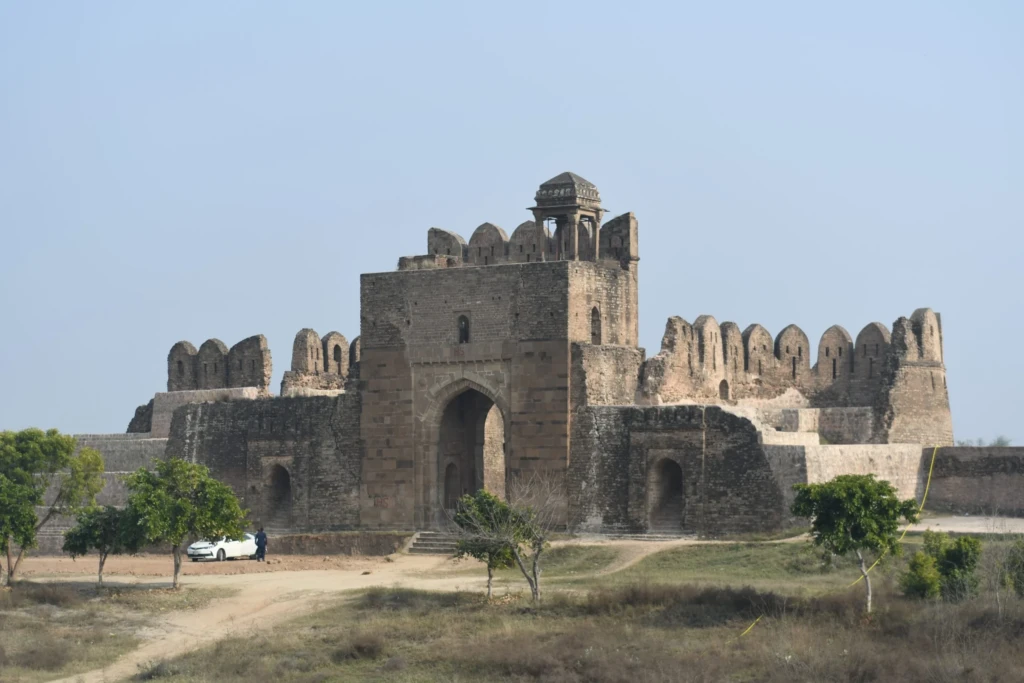
Rohtas Fort covers 171 acres, making it one of Pakistan’s largest forts. Its design emphasizes strength, defense, and strategic control. The fort is an Afghan military architecture masterpiece combined with early Mughal influences. Thick walls, steep gates, and carefully placed bastions made it almost impregnable.
Defensive Features:
- Walls over 4 kilometers long to prevent direct attacks
- 12 massive gates designed for control and protection
- Over 60 bastions for surveillance and defense
- Strategic placement along hills to dominate surrounding land
- Moats and narrow pathways to slow down attackers
Builders used local stone and brick, making walls sturdy and long-lasting. Many gates have decorative arches, but they are primarily military in function.
Famous Gates of Rohtas Fort
Sohail Gate:
The main entrance of Rohtas Fort. Named after Sohail, a local commander. Combines military strength with artistic beauty. Features massive stone arches and steep stairways to prevent enemy access. Historically, it was the first line of defense against invading armies.
Kabuli Gate:
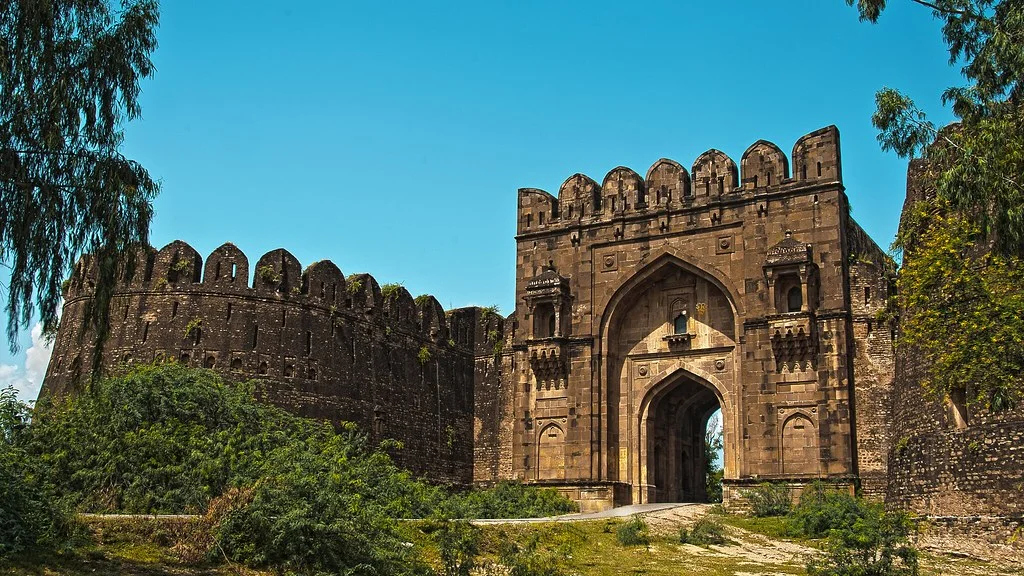
Faces towards Kabul, reflecting its strategic alignment with the northwest. Built with defensive bastions to monitor approaching troops from the Afghan side. Soldiers could control movement along the Grand Trunk Road from this gate.
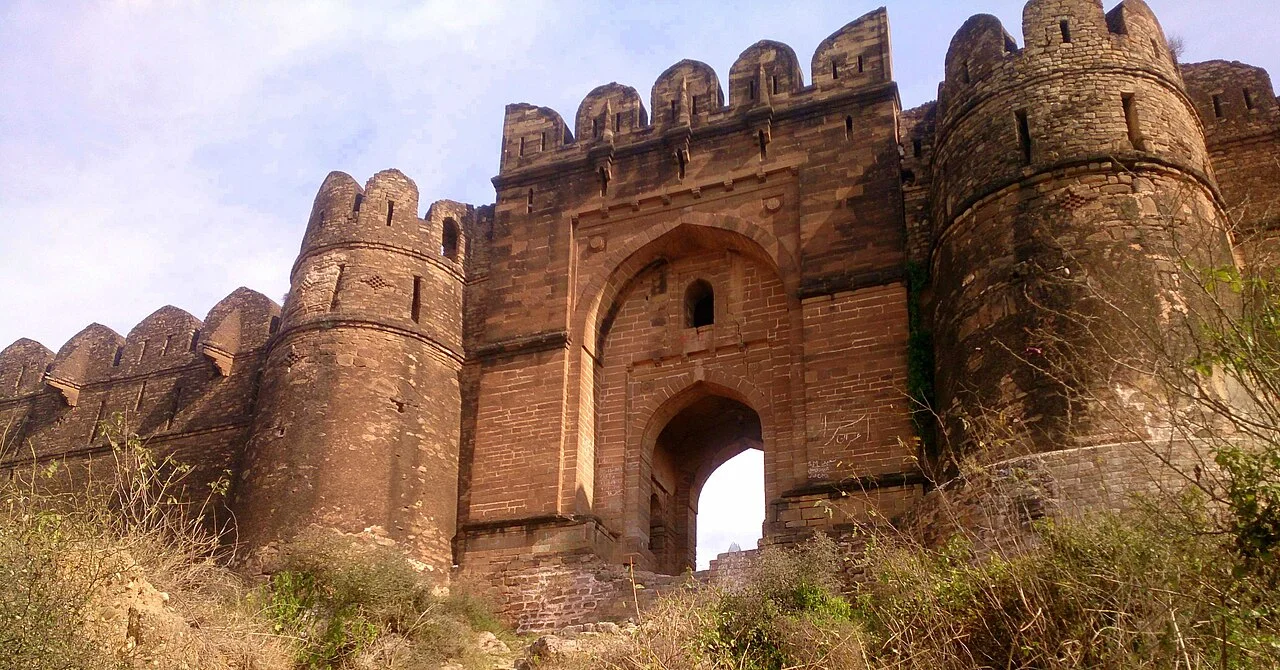
Shah Chandwali Gate:
Served as an internal passage for soldiers to move safely inside the fort. Allowed quick deployment of troops to different sections of the fort during attacks. Designed with high walls and narrow entrances for defense.
Important Structures Inside Rohtas Fort
Rohtas Fort is not just walls and gates; it houses key structures that show both military planning and cultural influences:
Shahi Mosque
Built for soldiers and local followers. Simple yet elegant design, showing early Islamic architecture. Features arches, domes, and calligraphy, emphasizing functionality for prayer and assembly.
Haveli Man Singh
Built later during the Mughal period for Raja Man Singh, a trusted general of Emperor Akbar. Located on the highest point of the fort, giving panoramic views of the fort and surrounding lands. Served as a residence and observation point, blending defense with Mughal elegance.
Rani Mahal
Located near Haveli Man Singh, possibly used for residential or ceremonial purposes. Some parts remain intact today, showing the fort’s dual use: military and limited royal residence.
Bastions and Watchtowers
Over 60 bastions are spread across the fort walls. Designed for surveillance and archery positions. they allowed soldiers to defend the fort efficiently, covering every angle.
Other Notable Structures
- Water reservoirs and wells: Provided water for soldiers during sieges.
- Pathways and ramps: Designed to move troops and supplies efficiently.
- Storage areas: For weapons, food, and ammunition.
Together, these structures highlight Rohtas Fort’s military brilliance. Every building, gate, and pathway was planned for defense, observation, and strategic advantage.
Why Rohtas Fort is Unique
Rohtas Fort stands out from other forts in South Asia.
- Built purely for defense, not comfort
- Mughal rulers never lived here as royalty
- Its architecture shows military strategy, planning, and control
- Massive walls, strategic gates, and bastions demonstrate advanced planning
UNESCO World Heritage Status
In 1997, UNESCO declared Rohtas Fort a World Heritage Site, highlighting its global historical and cultural importance.
Visitor Experience at Rohtas Fort
Visitors can explore massive gates, strong walls, and historic structures. The fort offers a mix of history, architecture, and scenic views. Walking along the walls, visitors can imagine how armies marched and how battles were planned. Every gate and bastion tells a story of strategy, defense, and power.
Best Time to Visit:
- Winter or spring (pleasant weather)
- Early morning for cooler temperatures and fewer crowds
Conclusion
Rohtas Fort is more than a historic structure. It is a symbol of power, strategy, and military genius. Its walls, gates, and bastions tell stories of war, planning, and defense. It is a must-visit for history enthusiasts and travelers exploring Pakistan’s rich heritage.
Rohtas Fort is not just a monument; it is a living legacy of Sher Shah Suri’s vision.
