
Introduction
Minar-e-Pakistan is one of the most important national landmarks in Pakistan. Located in Lahore, this iconic monument marks the place where the Lahore Resolution was passed on 23 March 1940. That historic event eventually led to the creation of Pakistan.
Today, Minar-e-Pakistan attracts thousands of visitors every year. People visit to learn about history, enjoy the surrounding park, and admire the monument’s impressive architecture. Whether you are a tourist, student, or history enthusiast, Minar-e-Pakistan offers an unforgettable experience.
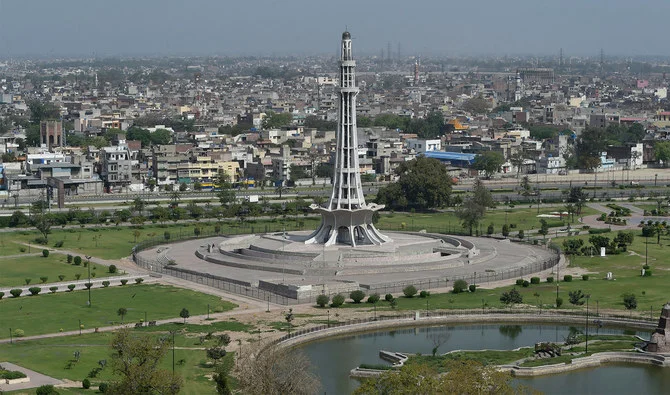
Location of Minar-e-Pakistan
Minar-e-Pakistan is located in Greater Iqbal Park on Circular Road in Lahore, Punjab, Pakistan. The monument stands at the exact site where the historic Lahore Resolution was passed on 23 March 1940. Its central location makes it easily accessible from different parts of Lahore.
How Far is Minar-e-Pakistan from Major Locations?
- Lahore Railway Station: Approximately 4 km
- Allama Iqbal International Airport: Approximately 18 km
- Thokar Niaz Baig: Approximately 20 km
Visitors can reach Minar-e-Pakistan by car, taxi, ride-hailing services, Metro Bus, or local public transport.
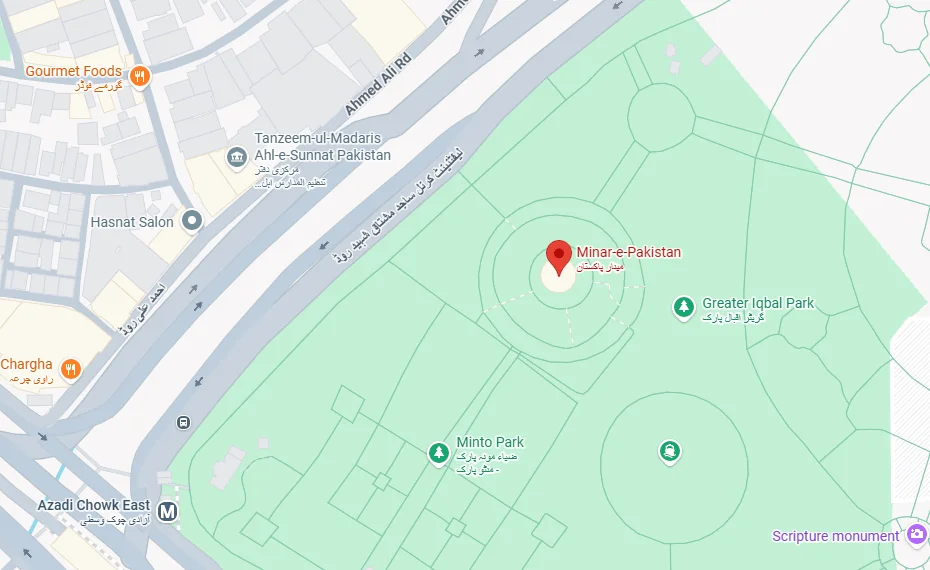
How to Reach Minar-e-Pakistan
By Car
Visitors can easily reach Minar-e-Pakistan through Circular Road. Parking facilities are available near the park.
By Ride-Hailing Services
Careem, InDrive, and Uber alternatives operate throughout Lahore.
Approximate fares:
- Gulberg to Minar-e-Pakistan: PKR 500–800
- DHA to Minar-e-Pakistan: PKR 700–1,000
- Lahore Airport to Minar-e-Pakistan: PKR 1,200–1,800
By Metro Bus
The nearest Metro Bus stations include:
- Shahdara Station
- Bhatti Chowk Station
From there, visitors can take a short rickshaw ride.
By Public Transport
Local buses and wagons regularly serve the area around the Walled City.
History of Minar-e-Pakistan
The history of Minar-e-Pakistan begins with the Lahore Resolution.
On 23 March 1940, the All-India Muslim League held its historic annual session at this location. During the gathering, Muslim leaders demanded an independent homeland for Muslims of the Indian subcontinent.
This resolution became a major step toward the creation of Pakistan in 1947.
To commemorate this historic event, the Government of Pakistan decided to build a national monument at the same location. Construction started in 1960 and continued for several years. The monument officially opened in 1968.
Today, Minar-e-Pakistan symbolizes freedom, unity, and national identity.
The Lahore Resolution became a major step toward the creation of Pakistan. Today, Minar-e-Pakistan stands as a symbol of that historic movement and remains one of the most important landmarks among the historical places in Lahore.
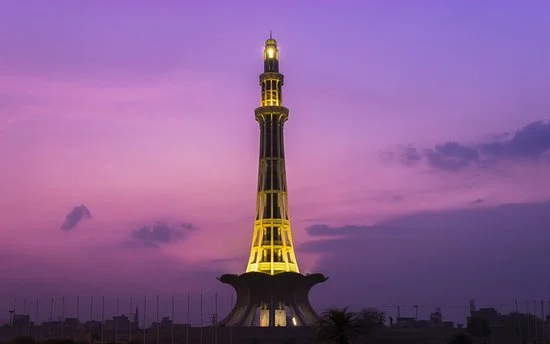
Architecture of Minar-e-Pakistan
Minar-e-Pakistan combines modern and Islamic architectural styles.
The monument rises approximately 70 meters (230 feet) above the ground.
Architect Nasreddin Murat-Khan designed the structure to reflect Pakistan’s journey from struggle to independence.
The base uses rough-cut stone to represent the hardships faced during the freedom movement.
As the tower rises, the construction gradually becomes smoother and more refined. This design symbolizes progress and achievement.
The monument features:
- White marble
- Reinforced concrete
- Islamic calligraphy
- Floral motifs
- Quranic inscriptions
The unique design makes Minar-e-Pakistan one of Pakistan’s most recognizable landmarks.
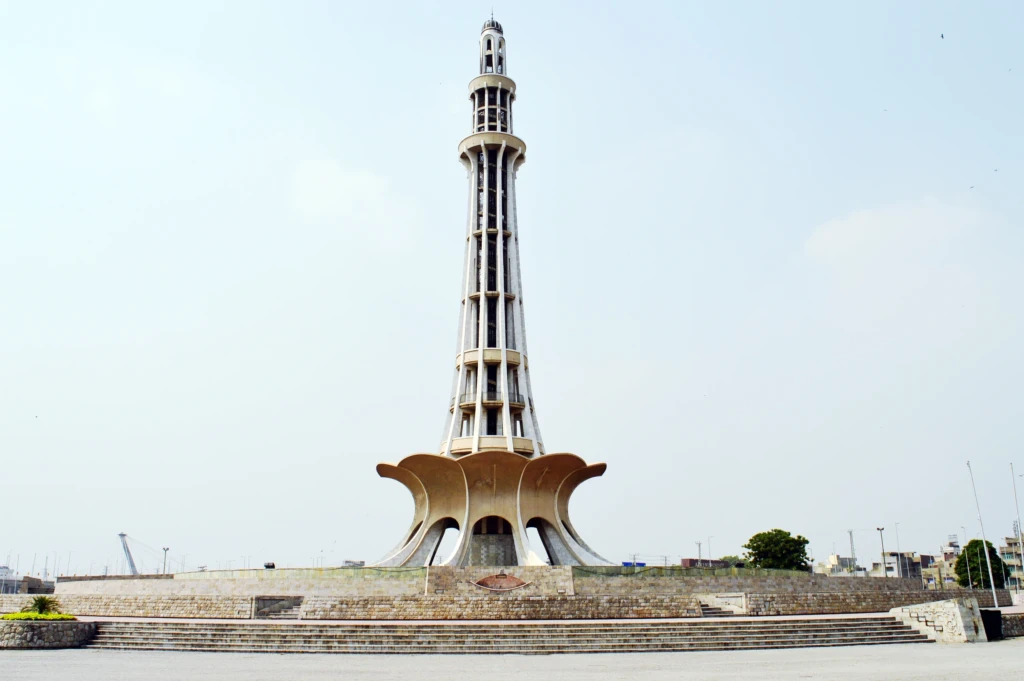
Inscriptions on Minar-e-Pakistan
Several important inscriptions decorate the monument.
Visitors can find:
- The Lahore Resolution text
- Quranic verses
- Speeches by Quaid-e-Azam Muhammad Ali Jinnah
- National poetry by Allama Iqbal
These inscriptions help visitors understand the significance of Pakistan’s independence movement.
Greater Iqbal Park
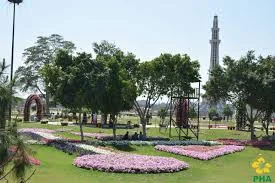
Minar-e-Pakistan stands within the beautiful Greater Iqbal Park.
The park offers:
- Walking tracks
- Green lawns
- Fountains
- Seating areas
- Family picnic spots
Many families visit during weekends and public holidays.
The evening lighting also creates a beautiful atmosphere for visitors.
Nearby Attractions
- Badshahi Mosque
- Data Darbar
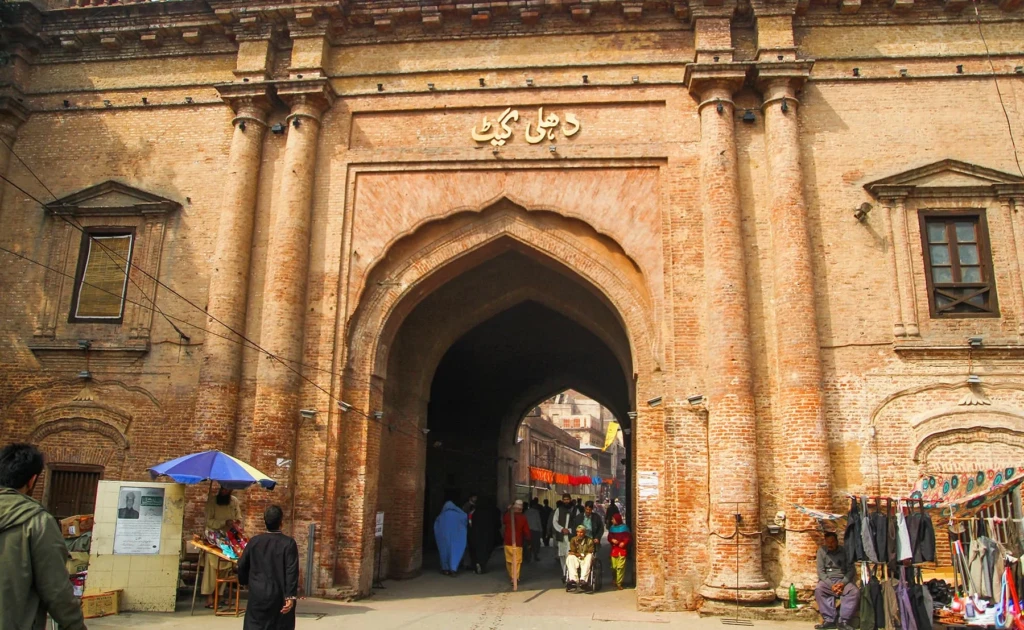
- Delhi Gate
- Wagah Border
- Bagh-e-Jinnah
- Lahore Museum
- Lahore Safari Zoo
- Food Street Lahore
Visitor Information
Opening Hours
The park generally remains open throughout the day. Evening visits are especially popular because of the monument’s illumination.
Entry Fee
Entry to Greater Iqbal Park and Minar-e-Pakistan is usually free. However, policies may change during special events.
Photography at Minar-e-Pakistan
Minar-e-Pakistan is one of Lahore’s most photographed landmarks.
Popular photography spots include:
- Front view of the monument
- Elevated park viewpoints
- Evening illuminated scenes
- Wide-angle shots with Badshahi Mosque in the background
Frequently Asked Questions
Why is Minar-e-Pakistan famous?
Minar-e-Pakistan marks the location where the Lahore Resolution was passed in 1940, paving the way for the creation of Pakistan.
Where is Minar-e-Pakistan located?
The monument is located inside Greater Iqbal Park in Lahore.
Is there an entry fee?
Entry is generally free for visitors.
How tall is Minar-e-Pakistan?
The monument stands approximately 70 meters (230 feet) tall.
Can visitors take photographs?
Yes. Photography is allowed and very popular.
Conclusion
Minar-e-Pakistan is much more than a monument. It represents Pakistan’s struggle, determination, and independence. Its historical importance, impressive architecture, and central location make it one of Lahore’s most visited attractions.
Whether you are exploring Lahore for the first time or revisiting its heritage sites, Minar-e-Pakistan deserves a place on your travel itinerary. A visit here offers a deeper understanding of Pakistan’s history while providing beautiful views and memorable experiences.
